
Checking for a Warrant in Linn County
Gather what you already know first. A case ID or citation number opens a cleaner path than a broad name search. The Iowa Courts Online case search is the statewide public index, but it is not a live warrant roster for Linn County. It can show case type, filings, hearing dates, payment details, and public document labels. Some warrant events stay restricted, and others lag before they post. Follow the official sequence below.
- Gather the legal name, Linn County case or citation number, notice, and court date.
- Search Iowa Courts Online by case ID or citation first, then by name if needed.
- Call the Linn County Clerk at 319-398-3411 to confirm a docket event or missed appearance.
- For sheriff-held material, request the narrow record or call Criminal Division at 319-892-6250.
- Use the jail search only to answer whether someone is now in custody.
A missing result is not proof that no warrant exists. Verify before acting.
Linn County Record Custodians
No single office holds every Linn County warrant record. The Linn County Clerk keeps Iowa District Court case files. The sheriff serves process and keeps its own reports. The Correctional Center reports who is in custody. City police and city clerks may hold local police or parking material, while the IOWA System carries restricted criminal-justice warrant data with no public self-service search.
| Source | Best question | Limit |
|---|---|---|
| Linn Clerk | Case, date, payment, docket event | No legal advice |
| Sheriff Criminal Division | Sheriff-owned public records | Restricted files may be withheld |
| Correctional Center | Current custody | Not a warrant check |
| Iowa Courts Online | Public case lead | Not live or complete |
Note: Confirm current office hours by phone before making a trip to Cedar Rapids.
Linn County Warrant Types
Iowa law uses several related terms with distinct meanings. An arrest warrant tells a peace officer to arrest someone and bring them before the court. A bench warrant in Linn County ties to a court event or order, often a missed appearance. A search warrant permits a search or seizure, not an arrest. A citation or summons may require a response without any arrest at all.
| Type | Cause | Authority |
|---|---|---|
| Arrest warrant | Probable cause on a complaint | Judge or magistrate |
| Bench warrant | Missed setting or court order | District Court judicial officer |
| Search warrant | Probable cause to search | Judicial officer |
| FTA warrant | Failure to attend as ordered | Issuing court |
Iowa sources for Linn County confirm no separate capias label. If a term looks unusual, ask the Clerk or counsel to define it.
Linn County Case Search
The Iowa Courts Online help guide favors precise identifiers. A case ID or citation avoids name collisions. The last-name field needs at least two letters. Try exact spelling first, then use a percent sign as a controlled wildcard. Timing matters too. General index data may take a business day to post, and eligible ePayment listings can take longer. A missing result does not prove there is no Linn County warrant, since sealed files, restricted documents, new filings, other counties, and federal cases follow other routes.
Inside a Linn County Warrant Record
A public docket shows only part of a Linn County warrant record. Iowa Code sections 804.2 and 804.3 describe the core content: identity, offense, issue date and place, judicial signature, and endorsed bail terms. The index may list a case ID such as LACR000000 while withholding the warrant document itself.
| Identifier | Case or warrant number used to match the court file. |
|---|---|
| Person and offense | Legal name or description and charged offense. |
| Issuing authority | Judge or magistrate and place of issue. |
| Bond | Court-set release term, not a sheriff fee. |
| Status | Issued, served, returned, recalled, quashed, or resolved, when public. |
Only the issuing court or authorized law enforcement can confirm live status.
Linn County Jail Is Different
The sheriff's Who’s in Jail search takes a name, age, and booking date behind a CAPTCHA. It answers a custody question, not a warrant list. It does not show every outstanding warrant or prove a recall. The Correctional Center source gives the public contact context.
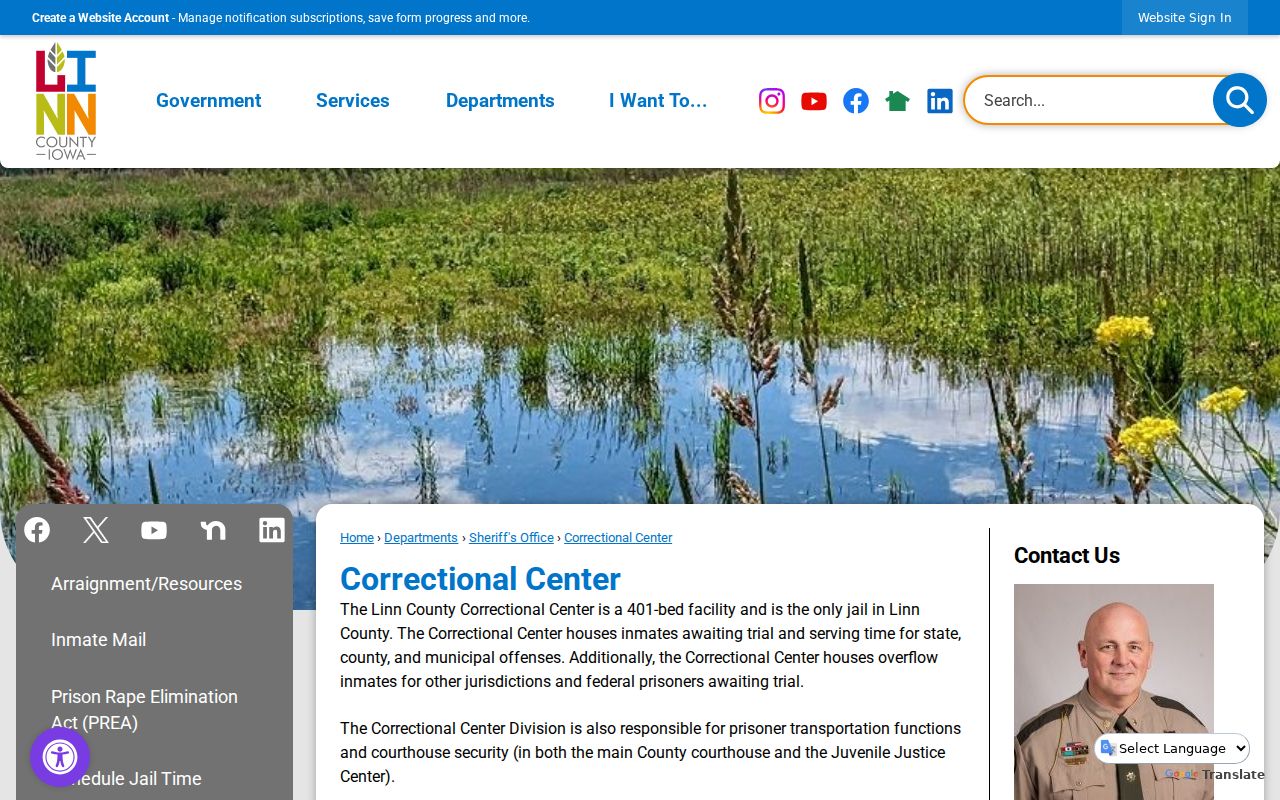
The image identifies a custody source, not a warrant-status database.
Issuing and Serving Warrants in Linn County
The Linn County adult process starts with investigation and prosecutor review. A complaint or indictment may follow. A judge then decides whether probable cause supports a warrant, summons, or other process. Iowa Code section 804.4 lets any peace officer serve an Iowa warrant in any county, while section 804.6 limits an arrest under warrant to a peace officer.
Linn County Clerk of Court
51 Third Avenue Bridge, Cedar Rapids
319-398-3411
Court files and docket routing
Linn County Sheriff
310 2nd Avenue SW, Cedar Rapids
319-892-6100
Service, dispatch, and sheriff records
Court issues → peace officer serves → court case resumes. A private caller cannot serve or clear a warrant.
Linn County Sheriff Records
A sheriff request works best when the Criminal Division owns the report you name. The Open Records Request page offers online and form routes. Keep the request narrow so staff can locate the Linn County record. Staff will call before collecting any required fee. The official Criminal Division source explains the custodian role.
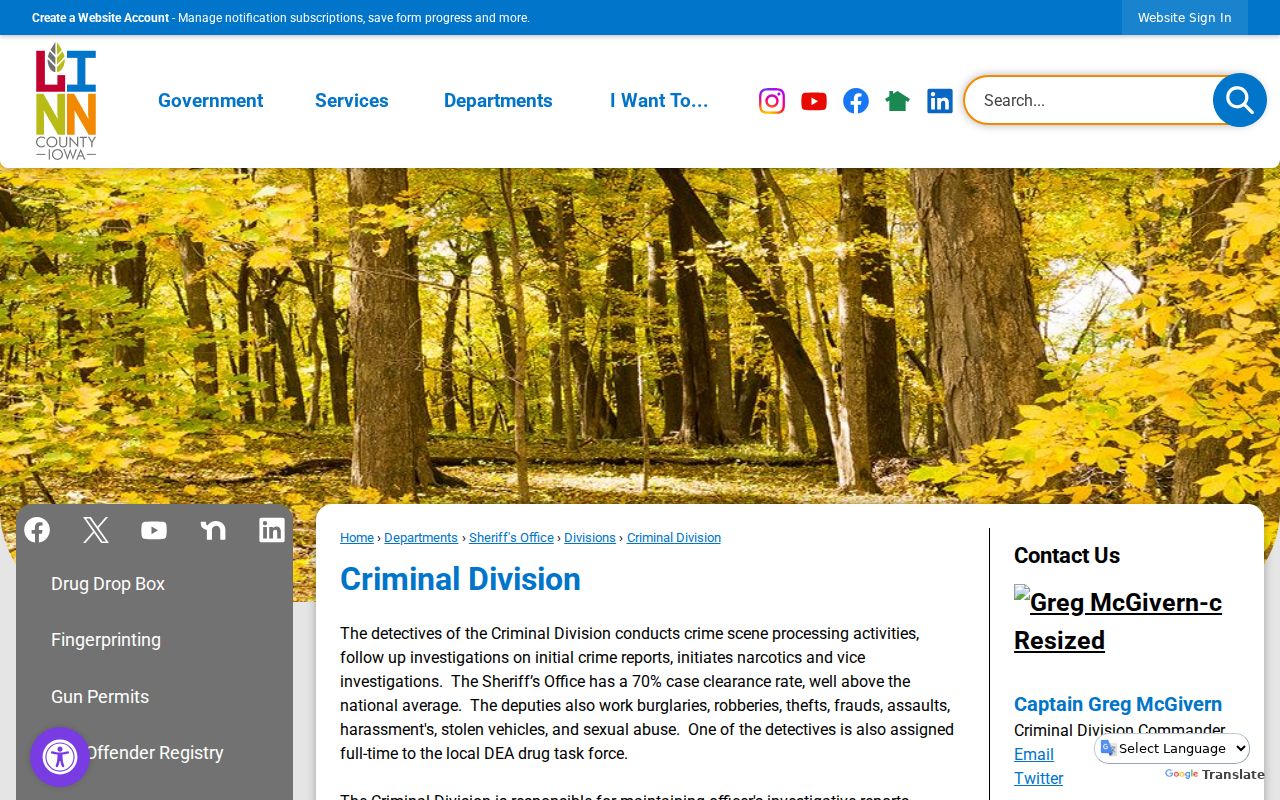
The request does not override limits on pending, sealed, juvenile, or unexecuted warrant material.
Linn County Warrant Records and Public Access
Linn County sits under Iowa's Open Records Law, Iowa Code chapter 22, which opens records unless an exception applies. Court files follow Judicial Branch rules too. Expect possible charges for copies, retrieval, review, redaction, postage, or supervision. Warrant confirmation, recall, and surrender carry no special fee here.
Access has firm limits.
Chapter 22 governs public records. Chapter 808 protects pre-execution search-warrant material. Chapter 232 restricts juvenile files.
A request cannot compel release of confidential records.
Linn County Dispatch Context
Sheriff Communications backs the sheriff and many emergency agencies in Linn County. Dispatch can route an urgent law-enforcement call, but it is not a public warrant database. Call 319-892-6100 for the sheriff; use 911 for emergencies. The official Communications page gives the service context.
For a routine docket issue, call the Clerk instead.
If You Have a Warrant in Linn County
Never assume payment, a blank search result, or a phone promise cleared a Linn County warrant. Read the case and ask the Clerk what the written order requires. A lawyer can advise on voluntary appearance, surrender, bond, and a motion to recall or quash. Recall means the issuing court withdraws the warrant itself.
Use official channels. Obtain legal advice before surrender or travel when an active warrant may exist, then follow the court’s direction.
Iowa Code section 811.2 generally starts bailable cases with recognizance or an unsecured bond unless more conditions are needed. Linn County posts no universal warrant bond amount or bond-window schedule.
Linn County Payment Plans
Court debt, license reinstatement, and warrant status are three different things. The county payment-plan program brings Sheriff Finance, Iowa DOT, and the Clerk together for qualifying debt. Staff reach out after a form is filed and negotiate terms. A plan does not automatically recall a warrant, though. Finance warns that failing to schedule court-ordered jail time within the stated period can cause an arrest warrant, and that warning applies to the order, not every debt. Ask the Clerk whether payment changes the court event in Linn County.
Linn County Warrant Terms
Plain definitions keep a docket entry from being read too broadly.
- Outstanding
- Issued and not known to be served, recalled, or resolved.
- Bench warrant
- An arrest warrant linked to a court event or order.
- Recall or quash
- A court action withdrawing or setting aside a warrant.
- Failure to appear
- Missing a required court event.
- Bond
- A court-set release promise or condition.
The exact docket and court order control.
Linn County Warrant Scams
Scammers feed on warrant fear. Callers pose as Iowa or Linn County officers, threaten arrest, and demand cryptocurrency, gift cards, or a kiosk payment. Real officers never collect court fines that way. Hang up and give out no financial data. To check a genuine balance, use the Clerk or sheriff number listed on the official agency page. If money is truly owed, follow Clerk instructions or use the official Iowa payment route. A demand for fast, irreversible payment is the clearest sign of a warrant scam.
Linn County Warrants by City
Iowa's unified District Court serves the five largest Linn County cities. City police may keep local records, while the Linn Clerk holds the court files behind any Linn County warrant.
Cedar Rapids
137,710 residents in the 2020 Census; county seat.
Marion
41,535 residents; traffic cases route to the Linn Clerk.
Hiawatha
7,183 residents; parking and court cases use separate routes.
Mount Vernon
4,527 residents; shared Mount Vernon-Lisbon Police.
Robins
3,353 residents; city police and court records are distinct.
Counts are 2020 Census figures in the county hazard plan.
Linn County Sheriff Services
The official Sheriff page lists divisions and public services:
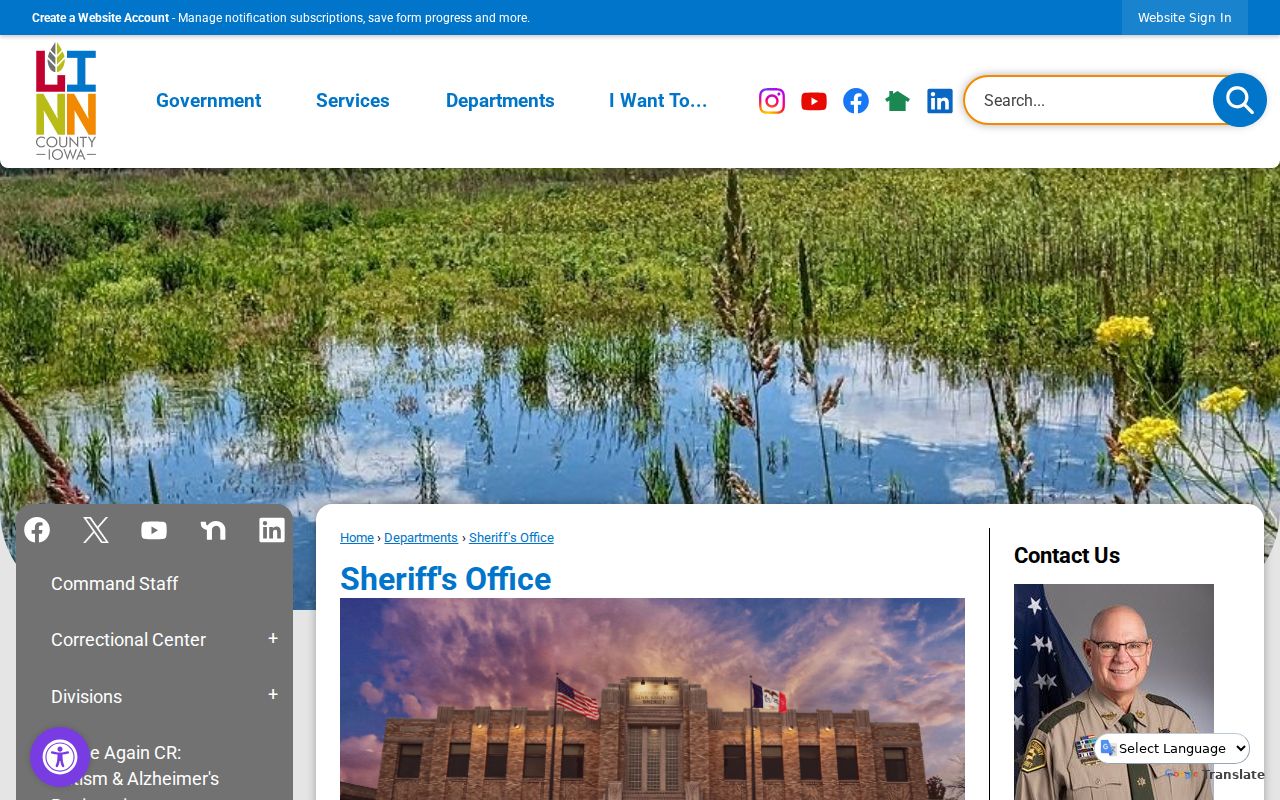
Start with the tools the sheriff actually publishes. The app released in September 2026 covers jail information, tips, fine payment, and community resources, but it offers no warrant search. That gap matters. A fine-payment menu is not a court docket, and the inmate feature is a custody lookup, nothing more. The sheriff's 2023 fact sheet goes a different direction, naming seven divisions plus a U.S. Marshal Warrant Task Force specialty. Linn County clearly joins coordinated warrant work through that task force. Still, no public task-force database comes with it. Federal matters also sit outside Iowa District Court entirely. The Northern District of Iowa runs a Cedar Rapids division, so federal warrant questions must travel the federal court or U.S. Marshals route rather than a Linn County case record. Patrol coverage explains another wrinkle. City police answer calls inside Cedar Rapids, Marion, Hiawatha, Mount Vernon, and Robins, while the sheriff covers unincorporated Linn County and contracted communities. Iowa law lets any peace officer serve a warrant statewide. So the agency that contacts you may not be the agency that issued or keeps the record. Ask who owns the document before filing any records request.
Linn County Court Visit Basics
The Linn County Clerk sits at 51 Third Avenue Bridge in Cedar Rapids. The official court directory covers parking, accessibility, security screening, and the no-weapons rule. All of it helps you follow a court instruction safely. None of it replaces a call about your case. Confirm the court date, the room, and current access rules with the Clerk before you travel. The courthouse itself sits on Mays Island, a civic setting apart from the city around it. Court-history materials describe Bedford limestone, Roman and Greek design elements, travertine walls, marble floors, and a 1975 rededication. That setting is part of how Linn County's court history reads today. Present-day case questions still follow the current Sixth Judicial District directory. When you go, bring the case or citation number plus the court notice. Ask something focused: which case is involved, what public event appears, which court issued the order, and what written next step applies. Clerk staff can explain record access and procedure. They cannot tell you whether to surrender or predict an outcome. Legal strategy belongs with an attorney.
Confirming Linn County Warrant Status
Document whatever you verify. Write down the case number, the office contacted, and the instruction received, so the source and the time of your Linn County warrant check survive past the phone call. Never copy private details into a public post or pass a court image beyond its lawful need. If Iowa Courts Online clashes with an older notice, the Linn County Clerk can confirm the public docket and name the issuing court. A sheriff record and a court record can also disagree without either one being wrong. One tracks law-enforcement activity. The other holds the judicial file. Ask directly whether the warrant was served, returned, recalled, quashed, or still outstanding. If the answer affects surrender, bond, or a missed court date, talk to counsel before acting. Careful source matching is the heart of a sound warrant-record check in Linn County.