
Linn County's Most Wanted Program
The Linn County sheriff posts no public most-wanted roster, and neither the county's Crime Stoppers page nor its other official law-enforcement sources publish one. That gap matters. Private websites fill it with copied photos, booking rows, and jail listings, but a jail entry is not the same as a current warrant, and a private list is not an official one. The verified local program is Linn County Crime Stoppers, a partnership of residents, law enforcement, and media outlets. It gives people a way to pass along what they know about a crime. It cannot confirm a warrant for you, force an arrest, or stand in for emergency dispatch. Only the official program is described and linked here; names, mugshots, and rosters are never republished. Anyone checking on an active warrant should go through the sheriff or the court clerk instead.
No Linn County Wanted Roster
No roster does not mean no warrants. Linn County law enforcement can hold active warrants the public never sees. Iowa DPS runs the IOWA System, formally Iowa On-line Warrants & Articles, a criminal-justice network open only to authorized users. Public court access has its own limits.
Verified finding: Linn County publishes no complete public most-wanted or active-warrant roster.
For your own court matter, search Iowa Courts Online first, then call the Linn County Clerk at 319-398-3411. Sheriff-held public records go through the Criminal Division at 319-892-6250. Use these for your own warrant check, not to build a list of people.
How the Most Wanted Lists Work
Where a county posts one, a most-wanted list is a chosen set of notices, not every outstanding warrant. Agencies pick entries based on priorities and on whether they want the public's help. Linn County documents no such roster, no selection rule, and no update schedule. An active warrant, meanwhile, is a court order that has not been served, recalled, quashed, or resolved. It can sit outside any published list, and a listed item can change after it appears. Even an official notice would still need current confirmation from the agency itself rather than a copy stored somewhere else.
Note: Linn County posts no official roster, so there is no update schedule to report.
Crime Stoppers Is Not a List
The Linn County Crime Stoppers site promises confidentiality. Law enforcement gets a tracking ID, never the tipster's personal information. That design lets the program act on a report while shielding the person who sent it. Tips can go in online or by phone at 1-800-272-7463, written as 1-800-CS-CRIME. The published reward matrix runs from $50 to $3,000 by crime classification, and each reward is a program decision.
Reporting a Tip Safely
Pick the channel by urgency. Past or non-emergency information belongs with Linn County Crime Stoppers. Immediate danger means calling 911. A routine question about your own Iowa District Court record goes to the Clerk, not the tip line.
- Do not approach, follow, detain, or confront a person.
- Record only what was lawfully observed, without trespass or surveillance.
- Use the official Crime Stoppers phone or online route.
- Follow the program’s tracking instructions without posting the report publicly.
- Call 911 when there is an immediate threat or active emergency.
Safe tip route: Contact Linn County Crime Stoppers at 1-800-272-7463 or through its official report service. Never intervene yourself.
Linn County Tip Privacy
Confidential tipping is not an open-records request. Crime Stoppers hands law enforcement a tracking ID, not the tipster's identity. A Linn County sheriff records request is different: it asks the Criminal Division to locate a specific public record, and it can involve fees, review, redaction, and legal limits.
| Channel | Purpose | Not designed for |
|---|---|---|
| Crime Stoppers | Confidential crime tip | Personal warrant confirmation |
| 911 | Immediate emergency | Routine case research |
| Linn Clerk | Court docket and case routing | Anonymous tip rewards |
| Sheriff records request | Specified sheriff-held public record | Bypassing confidential files |
Keeping the channels separate protects both the tip process and record accuracy.
Most Wanted Lists vs Active Warrants
The terms overlap, but they answer different questions. A most-wanted notice asks the public for help with a few selected cases. An active warrant is a judicial order with a legal status. Linn County publishes neither a complete active-warrant roster nor an official most-wanted page.
| Point | Most-wanted notice | Active warrant |
|---|---|---|
| Purpose | Seek public information | Authorize arrest by a peace officer |
| Scope | Curated subset | Individual court order |
| Public display | Only if an agency elects to publish | May remain restricted |
| Confirmation | Publishing agency | Issuing court or authorized agency |
| Resolution | Not resolved by a tip | Served, recalled, quashed, or otherwise addressed by law |
An absence from either public view is not clearance.
Linn Task Forces Are Not Databases
A U.S. Marshal Warrant Task Force appears in the Linn County Sheriff's 2023 fact sheet as a specialty unit. A March 2026 U.S. Marshals release documents interagency work in the Linn and Marion area. The pattern is clear: Linn County agencies coordinate on warrants. What none of this offers is a public search service. The U.S. Marshals Northern District of Iowa works a federal layer separate from Iowa District Court, so federal records and warrants should never be mixed with Linn County state cases. A task force also does not authorize publishing private subject information or operational records.
Linn County App Boundaries
The Linn County sheriff app announcement from September 2026 lists jail information, inmate search, sex-offender information, gun permits, foreclosure sales, fine payment, tips, community resources, a drug drop box, and fingerprinting. No warrant lookup appears. No most-wanted gallery either. That official feature list is the honest guide to what the app does. The jail link is a custody search. The tip link only sends information. The fine link only pays a fine. So a private site that labels a Linn County app screen as a wanted roster is overselling it, and none of these tools confirms a live warrant status.
Local Pages Serve Other Purposes
Some city pages in Linn County get mistaken for wanted notices. They serve a different job. The real point is the boundary between a municipal service and a county public-safety program. The Hiawatha parking page shows a city service at work:
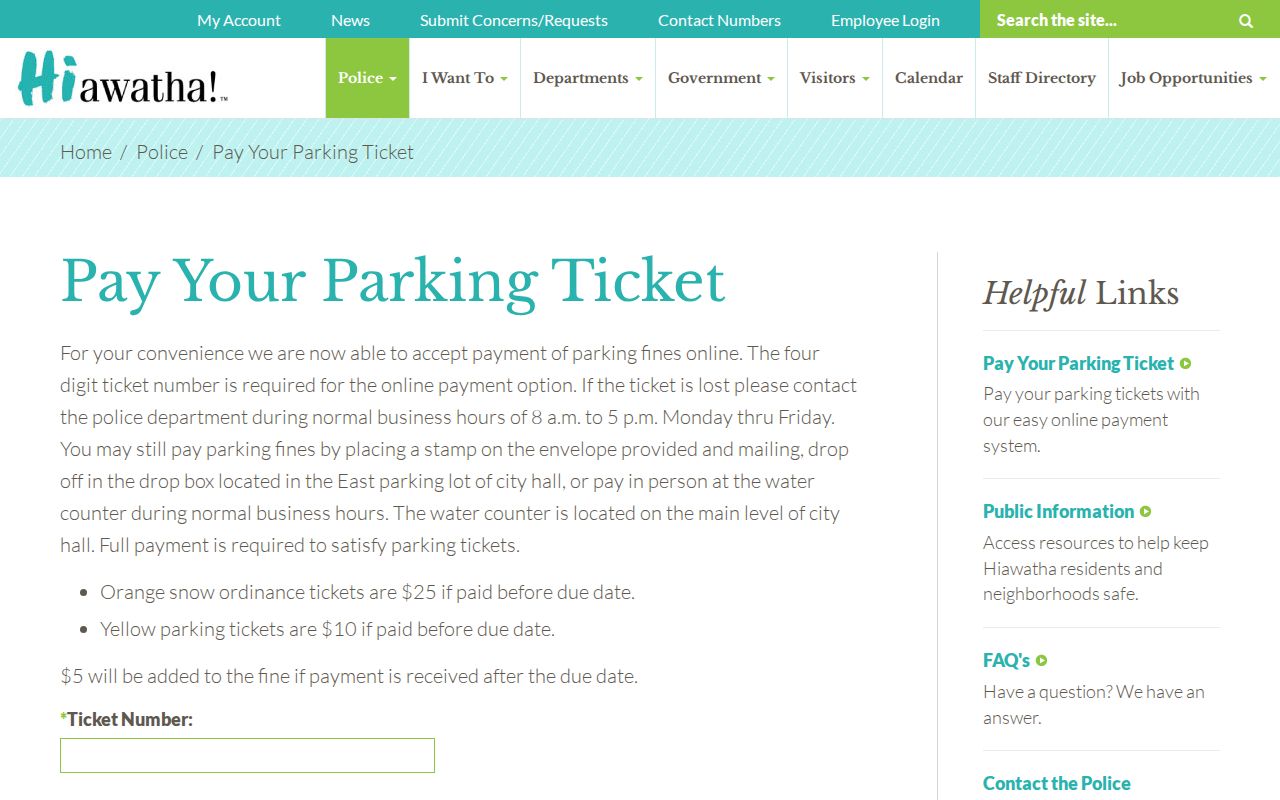
A blank payment form is not a warrant roster. It shows nothing about whether a warrant exists, since Linn County parking tickets and state court cases move through separate systems.
Mount Vernon Record Boundaries
Mount Vernon and Lisbon share one police department. That local fact helps residents of Linn County pick the right agency to call. The official Mount Vernon contact page gives the public city and police routes:
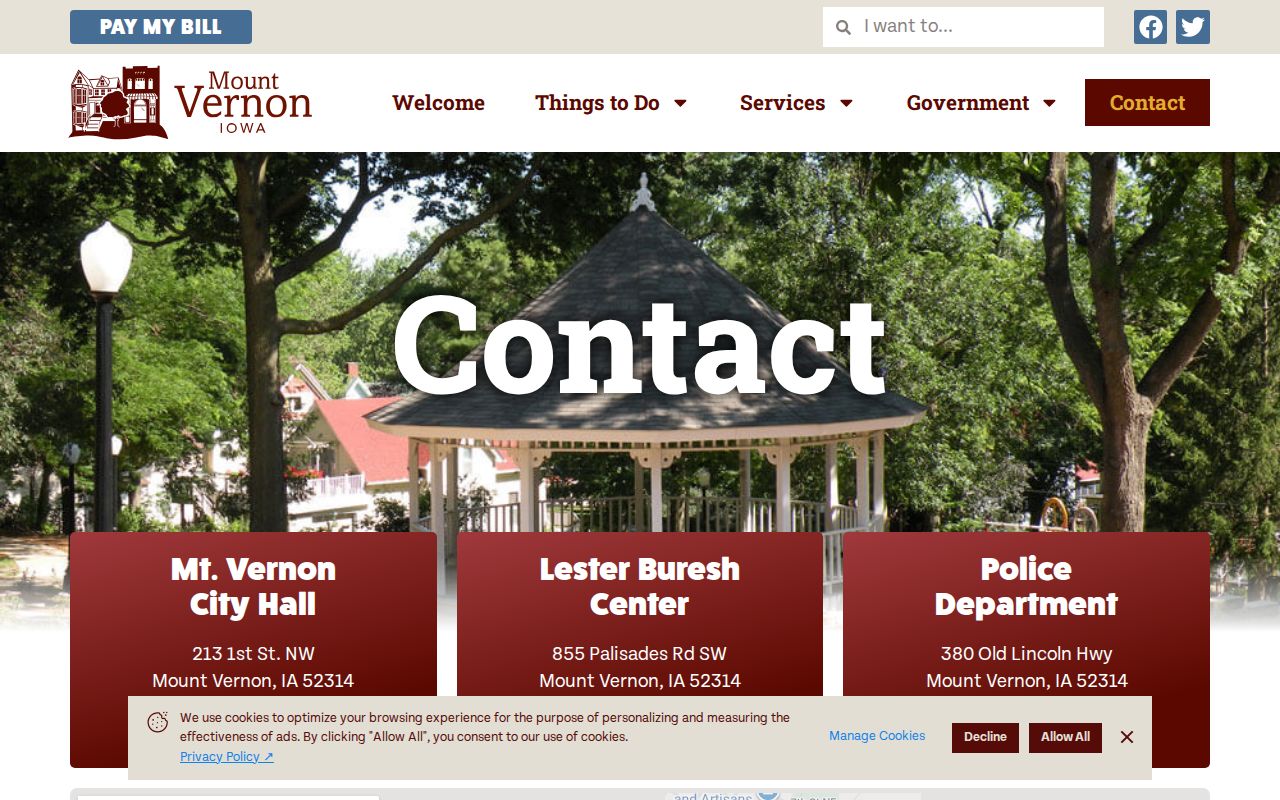
A city contact page can route a local police question. What it cannot do is establish a public Linn County most-wanted program. The Mount Vernon-Lisbon Police page lays out the shared department:
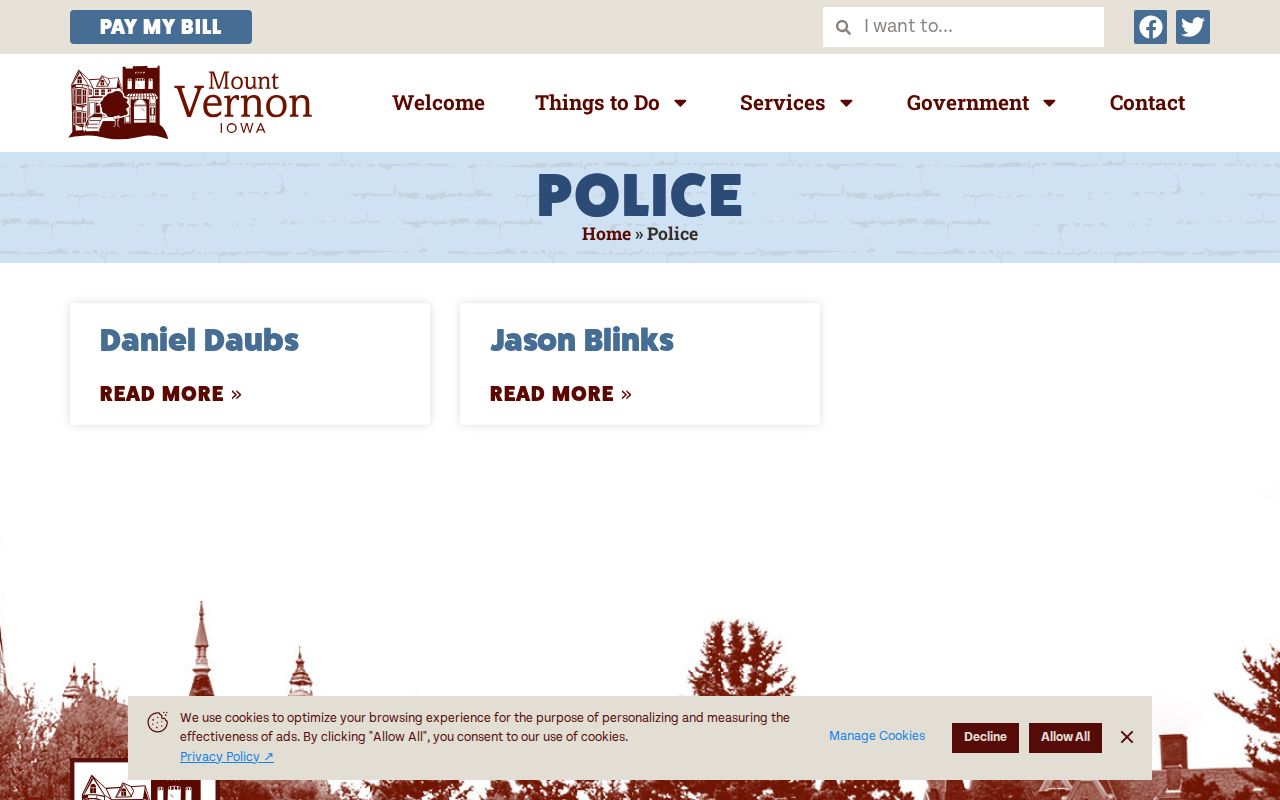
The department's reports and service information are not a wanted roster. Nothing there replaces a Linn County warrant check with the issuing court.
If You Think You Are on a List
Do not call Crime Stoppers to check your own status. Begin with your case or citation number in Iowa Courts Online. Then call the Linn County Clerk. If sheriff-held material is involved, use the official Sheriff number or Criminal Division, and an attorney can advise on surrender, bond, appearance, or a motion to recall or quash.
Do not rely on a web list. Seek legal advice and current instructions from the issuing court before travel, surrender, or payment.
Only the issuing court can withdraw its warrant. A payment receipt, a deleted webpage, a missing name, or a private caller's promise cannot do that. Iowa and Linn County officials warn about callers who threaten arrest and demand cryptocurrency, gift cards, or kiosk payment. Hang up. Verify through an official number you find on your own.