
Linn County Traffic Warrants Explained
A Linn County traffic warrant is a court order. It is not a driving-history report. It can follow a missed appearance or another unmet duty in an Iowa District Court traffic case. The citation starts the record, gives notice of the charge, and carries a number that leads back to the docket. Any warrant that later issues stays under a judge's control. Iowa runs one unified District Court structure, and judicial magistrates, district associate judges, and district judges all hear matters within it. Linn County has no separate municipal criminal court for city traffic charges. The Linn County Clerk of Court keeps the court-side case record. A peace officer serves the warrant. The sheriff's jail search, in turn, shows custody only.
Linn Citation to Court Order
The route can be written plainly: citation issued → response or court date required → event missed → judge reviews the case → warrant or other consequence may follow. A warrant is not automatic in every unpaid or late case. The docket and judicial order control, so the right question is whether the court issued an order in the specific case.
Iowa Courts Online locates a case through public search fields, and the ePayment search accepts a case or citation number. A name route may cover eligible debt. Neither tool is a live, complete warrant search. Fresh entries post slowly. Confidential items may be withheld, and a Linn County city parking matter may not appear at all.
Checking for a Traffic Warrant
Have your citation or case number ready before you call. Linn County staff can match it to the right file, and common names cause far fewer mixups that way.
- Search Iowa Courts Online for the Linn County case or citation.
- Review public docket events, but do not treat silence as proof that no warrant exists.
- Call the Linn County Clerk of Court at 319-398-3411 to ask what public status can be confirmed.
- For sheriff-owned reports, contact the Criminal Division at 319-892-6250 or use the county open-records route.
- Ask an attorney about a newly issued, restricted, or unclear order before arranging an appearance.
The clerk's office sits at 51 Third Avenue Bridge in Cedar Rapids. Hours differ across official pages, so call ahead before you drive.
Linn Court and Sheriff Tools
The September 2026 Linn County Sheriff app announcement shows its official service menu.
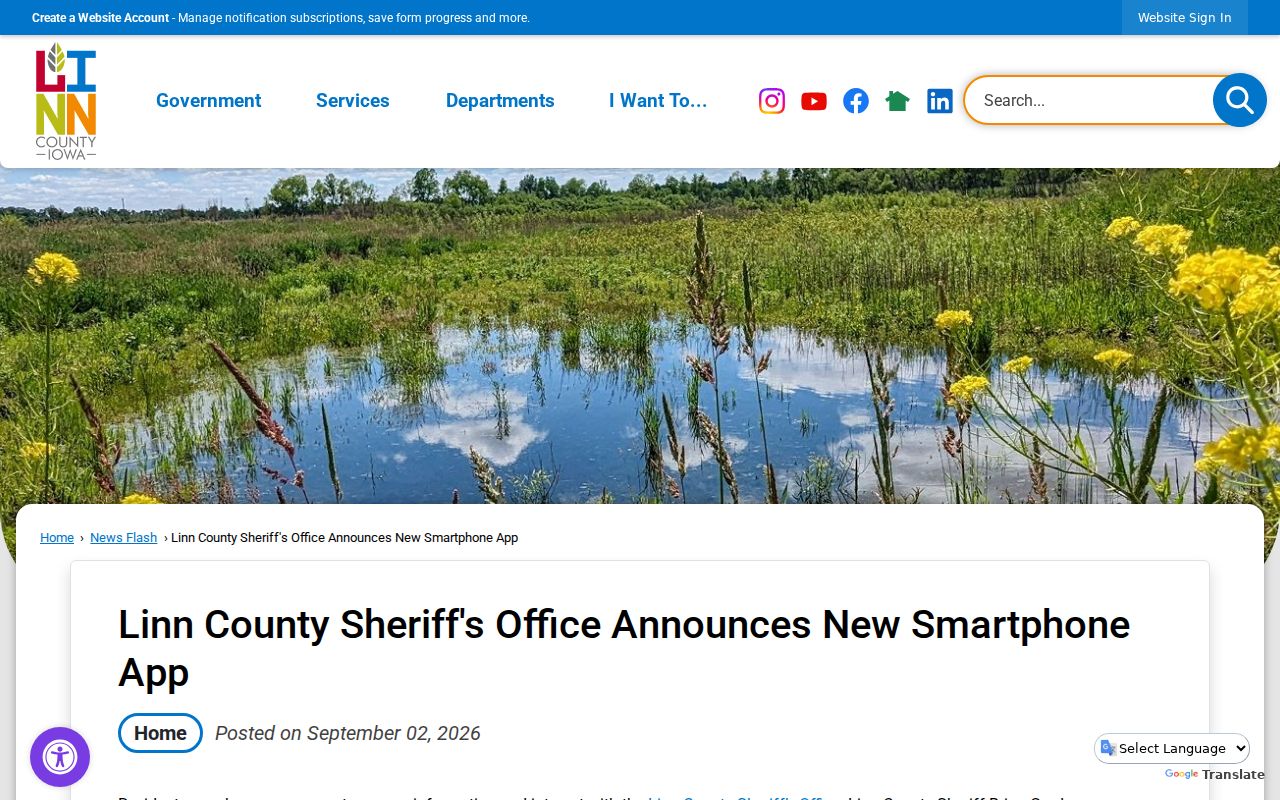
The sheriff's site menu covers jail information, inmate search, fines, tips, and community services. No active-warrant search is on it. Use the menu for what it names. A jail roster entry will not show every traffic warrant, and a fine-payment link will not tell you whether a judge recalled one. Those are court questions. For Linn County, split the duties this way: the sheriff handles records and service of papers, while the clerk of court handles the Iowa District Court docket and routes payments. Keeping the two apart stops a custody screen from standing in as a report on court status. The issuing court is still the only office that can confirm, recall, or quash a warrant.
Inside a Traffic Warrant Record
A Linn County traffic record ties the citation to each court event on the docket. Just which fields you can see depends on public-access rules and on whether the warrant has been served.
| Case or citation ID | The exact number used to search and verify the file, such as LACV012345 as a format illustration only |
|---|---|
| Named party | The person charged or cited in the court matter |
| Charge | The traffic offense or court allegation |
| Court event | The date, filing, or appearance tied to the case |
| Warrant entry | A judicial order when public access permits it to be shown |
| Financial status | Fine, costs, payment, or plan information, which is not itself warrant confirmation |
Take the number straight off your own citation. A made-up sample or someone else's record will not predict how Linn County handles your case.
Linn Courthouse Is the Court Route
The official Linn County courthouse history places the civic court setting on Mays Island.
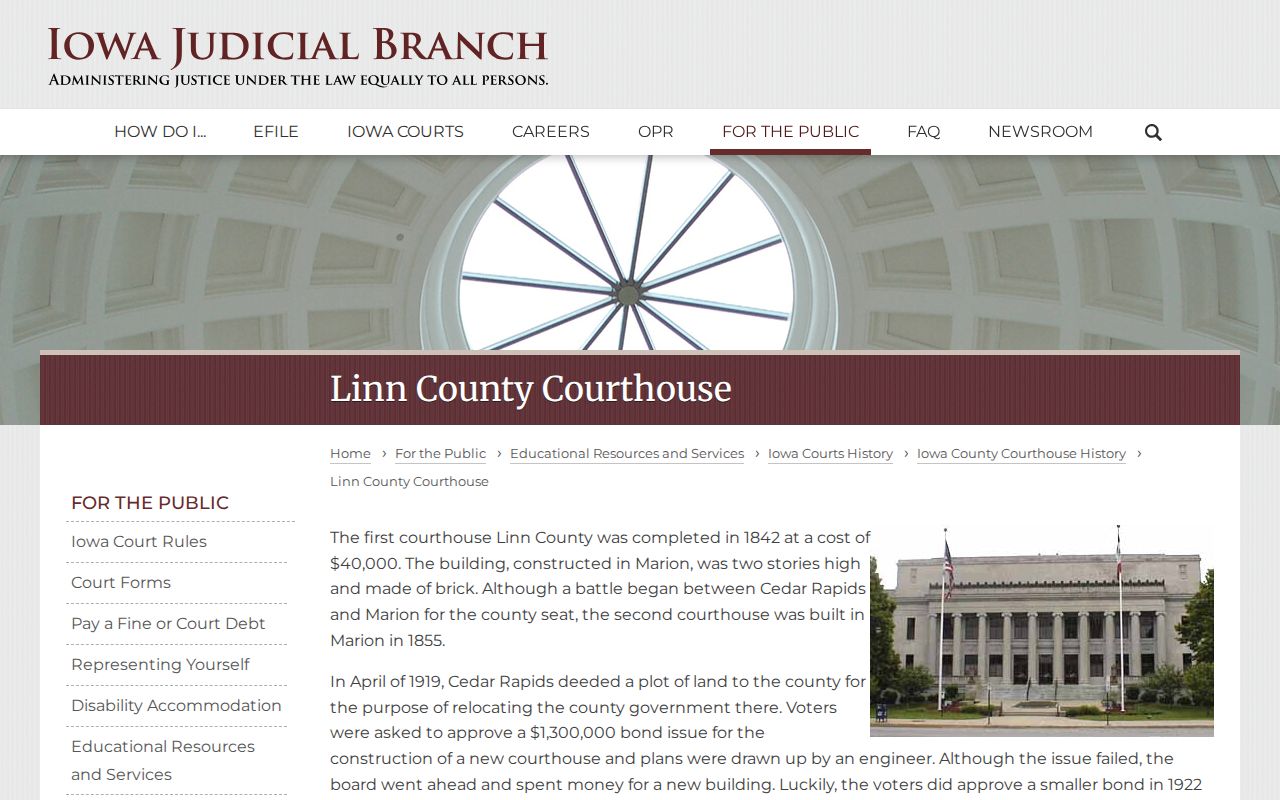
The courthouse itself is only a place. It proves nothing about a warrant one way or the other. Current court services and the clerk run through the Sixth Judicial District directory, which also lists parking, accessibility, security screening, and a no-weapons notice. All of that helps before a scheduled appearance. If arrest or bond worries you, talk to a lawyer first. The Clerk of Court keeps the case and citation records for Linn County, and staff there can explain access and procedure. They cannot tell you how to defend the charge. A judge decides whether an order stays in force, not the building, the clerk, or an online payment system.
How to Pay or Lift a Traffic Warrant
Paying and clearing the warrant are two steps, and you must confirm both. The Iowa pay-a-fine page warns that paying online may count as a guilty plea, and that data can lag. Read the terms first. Then ask the Linn County Clerk whether your payment covers the whole court event or whether the warrant needs its own judicial action.
- Match the citation, case number, and court before sending funds.
- Ask whether a court appearance, filing, or new date is required.
- Use only the official Iowa ePayment or clerk-approved method.
- Keep the receipt and request confirmation of the warrant status.
- Ask counsel about recall, surrender, or bond when an active order remains.
Caution: A paid balance or payment plan does not by itself prove that a Linn County traffic warrant was recalled.
Linn Court Debt and License Holds
Linn County offers payment plans for unpaid court debt, and those plans may support getting a license back. Iowa Code chapter 321 and the Iowa DOT nonpayment page control parts of that route. A DOT suspension alone does not mean a warrant exists. Docket, debt, and license are three separate checks.
| Status | Record owner | What to verify |
|---|---|---|
| Traffic warrant | Iowa District Court | Issuance and current judicial status |
| Court debt | Clerk or approved Linn plan channel | Balance, eligibility, and payments |
| License hold | Iowa DOT | Suspension and reinstatement requirements |
| Custody | Linn County Correctional Center | Current jail status only |
Clearing one Linn County hold leaves the others standing, so log every court confirmation in writing as you go.
Linn City Parking Is Separate
City parking has nothing to do with a warrant lookup. Marion's police FAQ routes traffic citations to the Linn County Clerk of Court, while parking tickets stay with the Marion Police. Hiawatha takes its own parking payments online, by mail, at a drop box, or in person. Iowa Courts Online handles state citations, not city parking fines. The Cedar Rapids municipal site is the department route for city questions, not a warrant portal.

That municipal landing page is a department directory, not a warrant portal. A state traffic citation belongs with Iowa Courts Online and the Linn County clerk. A local parking notice belongs with the city named on the ticket. And an overdue parking balance alone is no reason to assume an active warrant.
Traffic Warrants, FTA, and License Holds
Failure to appear, called FTA for short, means a court date came and went. It can support a bench warrant. But the docket controls. It shows what the judge actually ordered. A license hold is different, tied to unpaid court debt through a separate process. Terms such as capias or capias pro fine belong to other states, so a Linn County docket deserves a plain reading of its own entries.
- FTA
- Failure to attend a required court appearance.
- Bench warrant
- A warrant issued by a judge after a missed court duty.
- Recall
- A court order withdrawing a warrant.
- License hold
- A licensing consequence that does not itself prove a warrant.
- Citation
- The charging or notice document that supplies the case route.
Ask the Linn County clerk to translate the actual docket entry. A label borrowed from another state can mislead here.
Federal Warrants Are Not Traffic Records
The Northern District of Iowa Cedar Rapids page documents the separate federal courthouse.
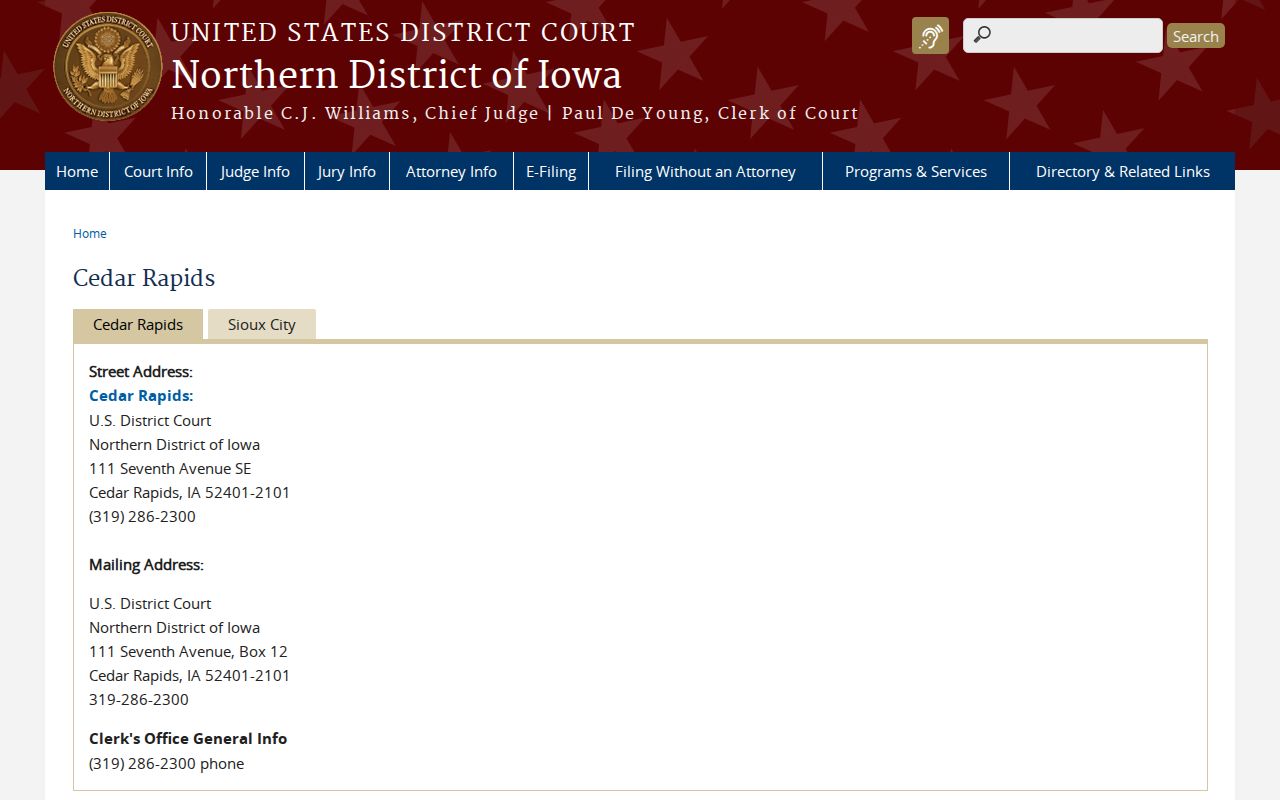
Ordinary Linn County tickets go to Iowa District Court. Federal court is a different world. Warrants from that side, PACER records, and U.S. Marshals matters all stay outside the county traffic route. Task-force cooperation creates no public federal warrant list. Read any notice before you act on it. Check the agency, the court name, and the case number printed on the page. Anything naming Iowa District Court belongs with the Linn clerk, while a genuine federal matter calls for federal counsel and the federal clerk. That quick check prevents wrong-office calls and warrant scams.
Linn Traffic Warrant Scam Signs
Iowa courts warned about this in June 2026. Callers were pushing fake warrants, missed jury duty, and demands for instant money. Hang up fast. No real court demands cryptocurrency, prepaid cards, or Social Security numbers, and none collects payment through a foreign phone number. Iowa officers never collect court fines. Find the Linn County Clerk number yourself. Ask whether the case exists before paying anything. Use the secure ePayment option only after the citation or case matches, and never through a link in an unexpected text.
Verify first: An authentic Linn County court debt can be checked through the clerk and official Iowa payment channel.
Note: A threat of instant arrest in Linn County is your cue to verify through official court contacts, never a reason to rush a payment.