
Linn County Municipal Court Warrants
Calling something a municipal warrant can send a Linn County reader down the wrong road. Iowa never built separate city criminal courts the way some states did. Instead, judicial magistrates, district associate judges, and district judges all sit within Iowa District Court, and under Iowa Code section 364.22 a municipal infraction gets filed and tried through that same structure. A city ordinance can still be where the trouble starts. City police write citations, a city can press a municipal infraction, and a local office may hang on to its own paperwork. None of that changes what a warrant is, though. It remains a judicial order tied to the Iowa court case, not a city document. For the public docket and questions about routing a court payment, the Linn County Clerk of Court is the central contact. The sheriff, or another peace officer, handles service.
Iowa Uses One Linn Court Route
The single-route setup is the fact that matters most here. A case that began in Cedar Rapids, Marion, Hiawatha, Mount Vernon, or Robins never shifts into its own municipal criminal court. The city stays relevant for records, but Iowa District Court supplies the judge, the docket, and any formal order. Iowa Code chapter 364 lets a city treat certain ordinance violations as municipal infractions. Section 364.22 sends the filing and the trial into District Court and assigns the hearing to a magistrate, a district associate judge, or a district judge. A municipal infraction stays civil unless some other law or ordinance says otherwise. So resist the urge to label every city fine or late parking ticket a criminal warrant. In Linn County, the court label is what controls.
Linn County Cities With Municipal Courts
None of Linn County's five largest cities operates its own municipal criminal court. The routing instead works like this:
| City | Local contact | Court route | Warrant status |
|---|---|---|---|
| Cedar Rapids | City police or city department | Linn County Clerk and Iowa District Court | No standalone city roster found |
| Marion | Marion Police for parking | Linn County Clerk for traffic citations | No city warrant portal found |
| Hiawatha | Hiawatha Police for parking | Iowa District Court for court cases | No municipal warrant portal found |
| Mount Vernon | Mount Vernon-Lisbon Police | Linn County Clerk | No city roster found |
| Robins | Robins Police | Linn County Clerk | No city roster found |
A missing city portal proves nothing about whether a warrant exists. In Linn County, it just makes the court-and-clerk route the one that counts.
Hiawatha Municipal Records Split
The official Hiawatha Police Department page supplies the city's police location and contact route.
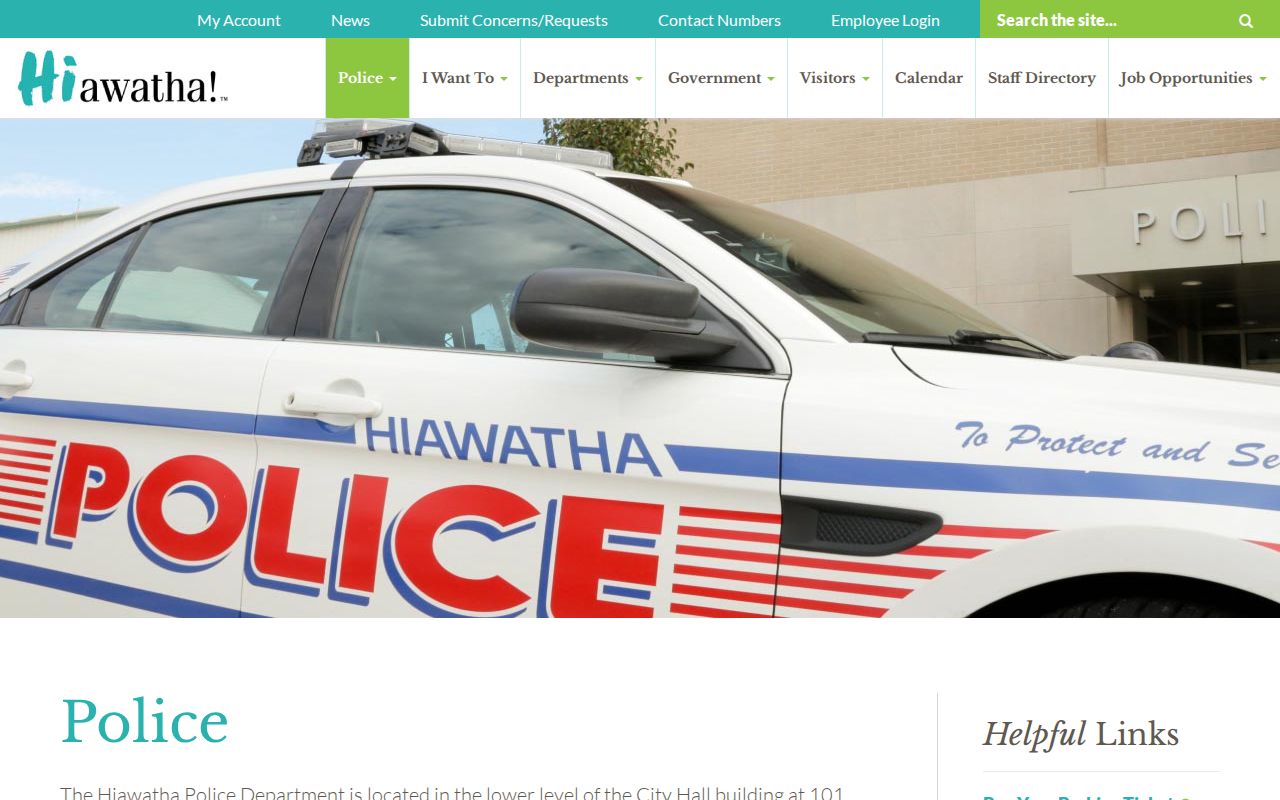
What Hiawatha publishes is a police contact point, not a separate court or warrant database. Hiawatha Police sits in the lower level of City Hall at 101 Emmons Street. Call 319-393-1515 for the main line, or 319-393-1212 for the listed non-emergency number. Report pickup and general information run weekdays, 8 a.m. to 5 p.m. Turn to the city for police records and parking questions, and to the Linn County Clerk for anything filed in Iowa District Court. Anonymous tips go to Linn County Crime Stoppers, which is no warrant roster.
Checking a Municipal Court Warrant
Any solid Linn County municipal warrant check begins with the paper itself. Read it for the issuing agency, the case or citation number, the named court, and any due or appearance date.
- Search Iowa Courts Online by the exact Linn County case information.
- Call the Linn County Clerk at 319-398-3411 to confirm public docket entries and the court route.
- Ask the city police department about its own report or citation record.
- For sheriff-owned records, contact the Linn County Sheriff Criminal Division at 319-892-6250.
- Use a formal open-records request when the responsible agency directs one.
- Ask counsel about restricted or newly issued orders that do not appear online.
Iowa Courts Online is a public case index, not a complete warrant list for Linn County. The IOWA System serves criminal-justice agencies only, and the public cannot search it.
Linn Parking Tickets Are Not Warrants
City parking pages mostly exist to take a payment. Hiawatha's parking form asks for a four-digit ticket number plus the payer's contact and address, and it accepts payment online, by mail, at a drop box, or in person. That screen never searches Iowa District Court cases, and a blank result proves nothing about an arrest or bench warrant. Marion draws the same line differently. Its police FAQ sends traffic citations to the Linn County Clerk at the courthouse, or by mail to Iowa District Court. Marion parking tickets stay police matters. Knowing the split tells a Linn County reader where to ask. Paying a parking ticket, though, is not warrant clearance.
| Document | Best first contact | What it does not prove |
|---|---|---|
| City parking ticket | Named city or police department | Existence of a court warrant |
| Traffic citation | Linn County Clerk | That a missed date was excused |
| District Court warrant | Clerk, counsel, issuing court | That payment alone recalls it |
Inside a Municipal Court Warrant
When a judge signs a warrant in a city-originated Linn County case, the useful identifiers live in the District Court record. There is no separate municipal docket to consult.
| Case number | The exact Iowa court identifier, such as LACV012345 only as a format example |
|---|---|
| Named party | The person named in the court order |
| Origin | The city citation, complaint, or municipal-infraction filing |
| Issuing court | Iowa District Court in Linn County |
| Reason | The legal basis or missed court event stated in the file |
| Status | Issued, served, recalled, or another status when public |
Some unexecuted warrant documents stay restricted in Linn County. A public case result can omit the order itself. The clerk can explain access, but protected content stays protected.
Use the Linn Case Number
A city name alone makes a weak search key in Linn County. Plenty of people share a name, and one person can carry more than a single city or county matter. The exact case or citation number is what anchors your search to the right docket. Iowa Courts Online help materials walk through case ID and name-search rules, including wildcards and the limits on public access. Copy the identifier from the citation exactly, character for character. When you call the clerk, say plainly that the question concerns a Linn County Iowa District Court case, then ask whether a public warrant entry exists, what court event comes next, and which office holds the record you want. Staff can give procedural help, never legal advice. Timing online varies too. General case data may post quickly, while payment pages warn of longer delays. If a date matters, confirm it with the clerk instead of waiting for a search screen to update.
How to Resolve a Municipal Court Warrant
Recall falls to a judge, not a city payment counter. That is true even for a District Court warrant with Linn County ties. No city here runs an amnesty program or a public municipal warrant portal, and there is no special Linn County clearance form. The right next step depends on the court file itself.
- Confirm the District Court case and the judicial order.
- Consult an attorney before a surrender when arrest, bond, or release terms may be involved.
- Ask the Linn County Clerk what appearance, filing, or hearing is scheduled.
- Pay through the official route only if the clerk confirms payment is appropriate.
- Request direct confirmation that the court changed the warrant status.
Caution: Paying a city ticket or court balance does not by itself show that a Linn County warrant has been recalled.
Linn City and County Roles
Three offices, three different answers. City police hold their own reports and may handle city parking matters. The Linn County Clerk is your route to Iowa District Court dockets, citations, fines, and hearing dates. The Linn County Sheriff, meanwhile, serves warrants and keeps the sheriff's own law-enforcement records. Ask each Linn County office only for what it truly owns.
Linn County Clerk of Court
51 Third Avenue Bridge, Cedar Rapids, IA 52401
319-398-3411
Sheriff Criminal Division
310 2nd Avenue SW, Cedar Rapids, IA 52404
319-892-6250
Each source answers less than people hope. The Correctional Center shows who is in custody, not every open warrant. City police pages cover local services, not the full District Court docket. Route each question to its record owner, and a partial answer will not pass for a Linn County search.
Linn Municipal Record Access Limits
Iowa Code chapter 22 sets the Open Records Law baseline for Linn County files. Court rules, limits on unexecuted warrants, and juvenile confidentiality still close some doors. An agency may withhold protected content or point you to the right custodian.
- Municipal infraction
- A city ordinance matter filed through District Court under section 364.22.
- Bench warrant
- A judge's order after a missed court duty.
- Recall
- A judicial withdrawal of a warrant.
- Custodian
- The office legally responsible for a public record.
- City parking record
- A local administrative record, not a warrant record.
Juvenile files and unserved warrants often reveal far less than an ordinary Linn County docket. A blank screen is not a clearance letter.
Linn Municipal Warrant Scam Signs
Iowa courts warned in June 2026 about scam calls built on fake arrest warrants, missed jury duty, and demands for instant payment. Real courts never ask for cryptocurrency, prepaid cards, Social Security numbers, or payment through foreign phone numbers, and Iowa peace officers do not collect court fines. A scammer may drop a real city name to sound local. Hang up. Then find the official Linn County Clerk or city police number on your own, check the case number through Iowa Courts Online, and ask the clerk whether an actual warrant exists. Use secure ePayment only after confirming the case and reading its plea notice.
Verify first: A genuine city-originated court matter can be traced through the Linn County District Court docket and official contacts.
Note: Pressure to pay at once is a warning sign, not proof of a real Linn County municipal warrant.